Case study · Logistics and customs
AGSA prepares a customs declaration in 15 minutes, where it took an hour
AI reads the documents, AGSA's rules draft the declaration, and a person checks it before filing.
At AGSA's customs desk
- 75%less time to prepare a declarationTime
- 80%fewer corrections per caseQuality
In short
What we built with AGSA
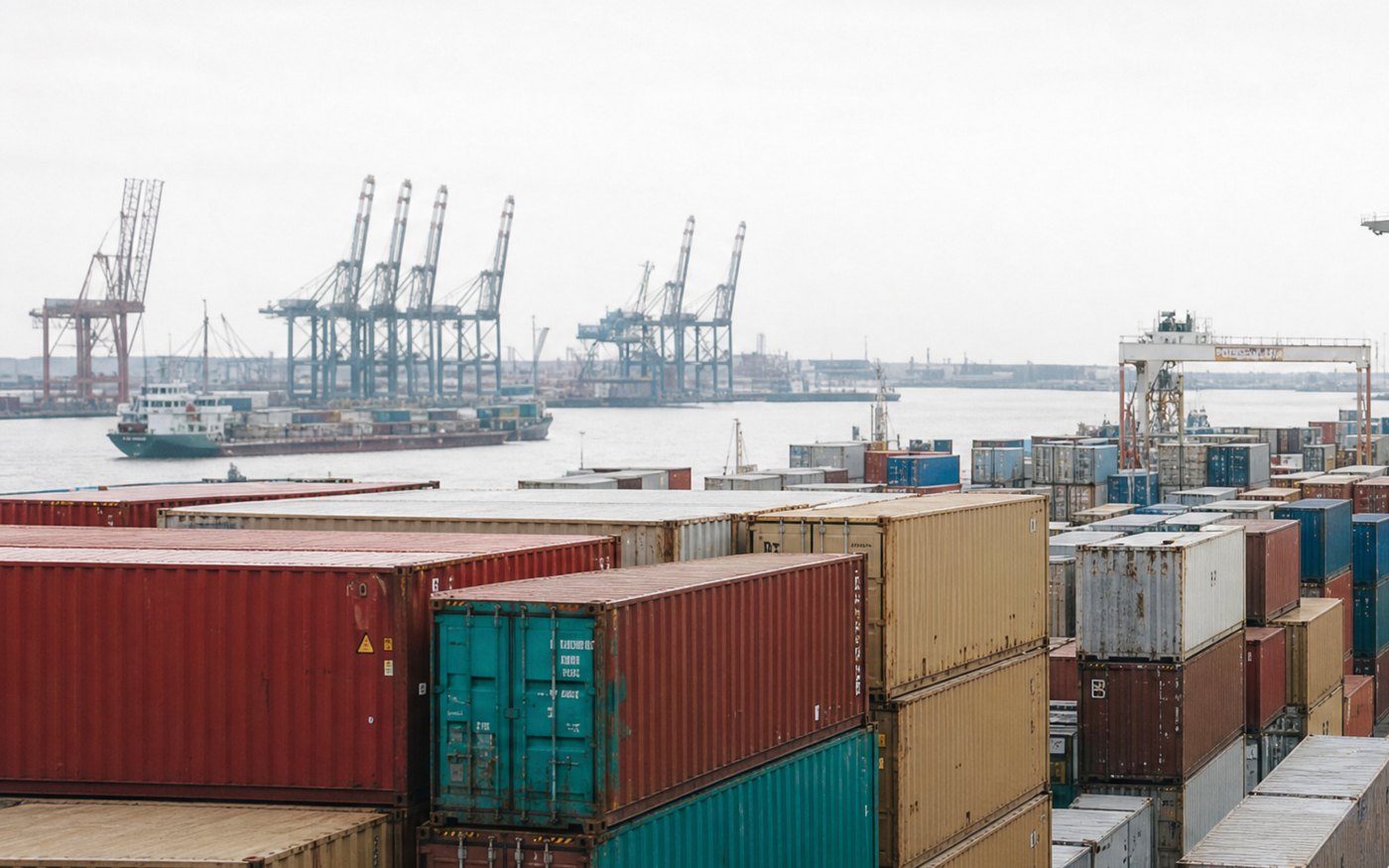
AGSA, a customs and logistics operator at the port of Barcelona, prepares its customs declarations with a workflow Fluency Labs built: AI reads the documents, AGSA's rules draft the declaration, and a person reviews it before filing.
A declaration took an hour of opening files, searching for data and keying it in. It now takes around 15 minutes, most of it review.
At a glance
| What | The case |
|---|---|
| The client |  AGSA (Aduanas Ginjaume SA), founded in 1982: customs clearance, transport, warehousing and sea and air forwarding. Part of Everwood Capital's transport and logistics fund since July 2024 (capital-riesgo.es, 11 July 2024). |
| The task | Preparing the DUA, the Single Administrative Document that declares a customs operation, from invoices, transport documents and certificates. |
| What we built | A hybrid workflow: defined steps, with an AI model called where a document has to be read. |
| Who decides | AGSA's team reviews every draft and its sources before the final filing. |
| Live since | 10 August 2026, in AGSA's daily work. |
| The result | From an hour to around 15 minutes a declaration. Corrections per case from 10 to 2. |
Time per declaration
From an hour to around 15 minutes
Measured from when the documents arrive to when the draft declaration is ready.
How it works
A defined workflow, with AI where it's needed
The steps of a declaration are known, so a workflow runs them in order. It calls an AI model only where a document has to be read, because every supplier presents its data differently.
- 01 Input
Receives documents and opens the case.
- 02 AI
Classifies documents and extracts the data.
- 03 Rules
Calculates and organises the draft.
- 04 Person
Reviews uncertainties, corrects and confirms.
- 05 Pre-DUA
Records the confirmed content.
- Register the input
- Automation collects the email attachments, prevents duplicates and opens the case.
- Classify and extract
- AI tells the documents apart, keeps the useful ones and finds the data, however each supplier lays it out.
- Check what's uncertain
- A value below the confidence threshold goes to a more capable model. The costlier model is used only where it's needed.
- Apply the rules
- The workflow checks the data against AGSA's rules: it groups, calculates and drafts the pre-DUA. When several invoices share an exporter and an importer, for example, they are grouped and their quantities and amounts added up.
Human judgement
Corrections per case: from 10 to 2
When a correction shows a criterion nobody had written down, such as which document takes precedence, the rule is added to the system and tested. Each one makes the next case cleaner.
10 → 2 corrections per case, on average
At scale
What 45 minutes means for the team
- 45 minutes back on every declaration
- Time the team spends on exceptions, new cases and better rules, instead of opening files and keying in data.
For private equity
One portfolio company, one KPI, measured
AGSA is a portfolio company. The KPI here was the time to prepare a declaration, measured from documents in to draft ready.
That's how every engagement starts: a 45-day Impact Sprint on a first use case, tied to one KPI. From there, more use cases, and a playbook the fund owns.
Questions
About this case
What is a DUA?
The DUA (Documento Único Administrativo), the Single Administrative Document, is the form that declares a customs operation. Preparing one takes data from invoices, transport documents and certificates.
How does AI prepare a customs declaration?
At AGSA, a workflow registers each case and its documents. An AI model classifies the documents and extracts the data, however each supplier presents it, and a more capable model reviews any value below the confidence threshold. The workflow then applies AGSA's business rules and drafts the declaration. A person reviews it before the final filing.
Does a person still check every declaration?
Yes. A person reviews each draft and its sources before the final filing. The AI reads the documents; the rules and the decision stay with AGSA's team.
How much time does AI save in customs work?
At AGSA, preparing a declaration went from an hour to around 15 minutes, about 75% less: 45 minutes back on every declaration.
Why a workflow, and not an AI agent for the whole process?
The steps of a declaration are known, so a defined workflow runs them in order and calls an AI model only where a document has to be read. That keeps the control and the cost of traditional automation, and uses the more expensive model only where it is needed.
Where else does this approach work?
In any process where a team spends a long time organising documents before it can apply its judgement: an insurer preparing policy proposals, or a fund normalising revenue, debt and margins from a target's documents during due diligence.
How does an engagement start?
We start with a 45-day Impact Sprint: a first use case, tied to one KPI. From there we expand into more use cases and set up an ongoing partnership. Before the sprint, book a short working session. We reply within one working day.
Sources
- Gonzalo Gilges, "How we reduced the time required for an administrative process by 75% using AI and automation", AI Firsthand No. 03, Fluency Labs. The case's figures.
- capital-riesgo.es, "Everwood compra AGSA Logistics", 11 July 2024. AGSA's history, services and owner.
Get started
Let's talk about one process
Book a short working session. Bring one process and one KPI. We reply within one working day.
Book a working session- hello@fluencylabs.ai