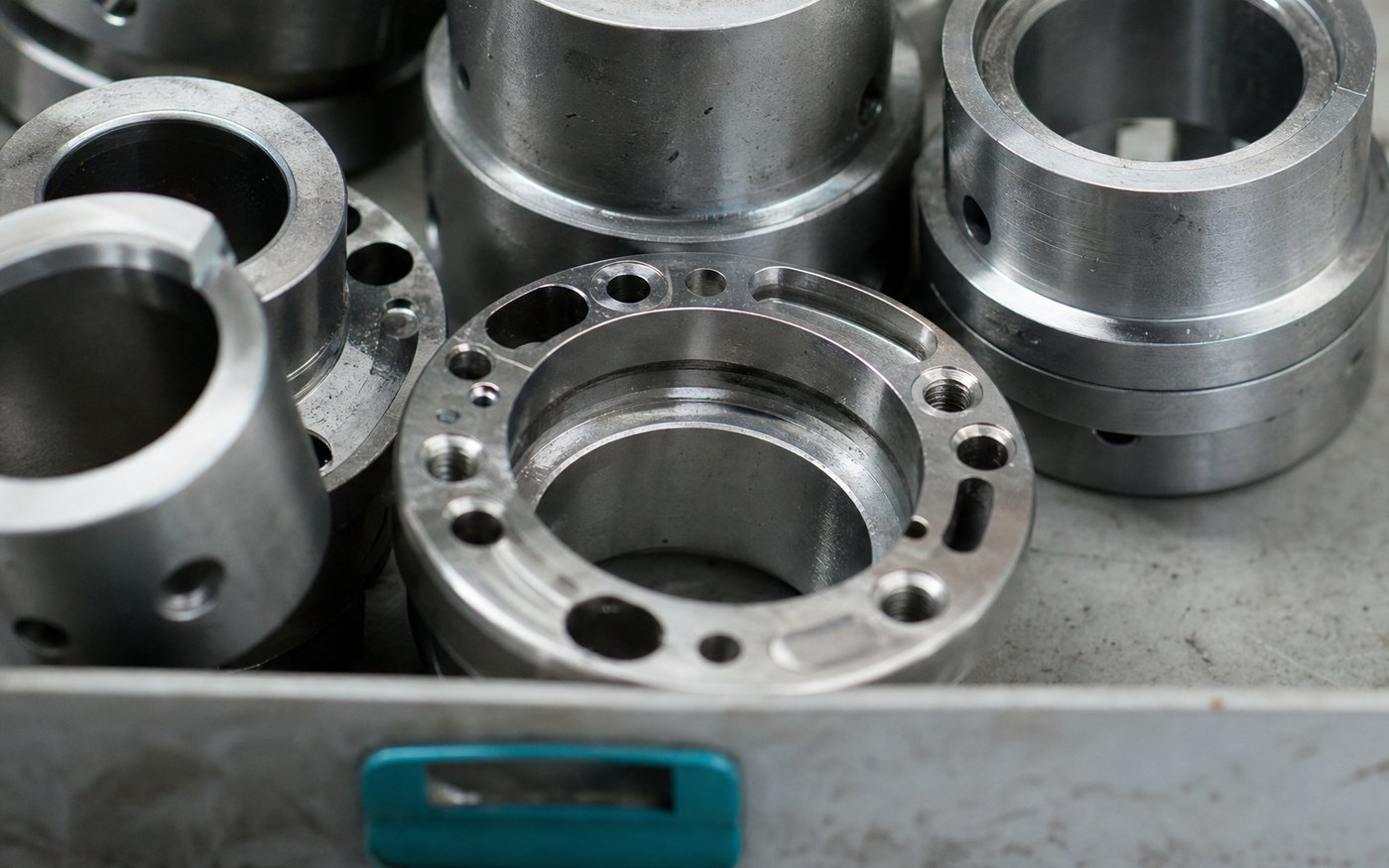
PE portco · Industrial
600+
unanswered requests turned into quotes
Every request gets a quote
AI reads each request and a rules engine sets the price; sales approves every quote. Live in four regions, with 9 or 10 in 10 right, up from 6.
For private equity funds
We go live in one portfolio company first, with its team. What worked becomes a playbook your fund owns.
In private equity portfolio companies
In short

Fluency Labs builds production AI systems for private equity portfolio companies. We start with a 45-day Impact Sprint: a first use case, tied to one KPI.
Our forward-deployed engineers work inside one company first, with its team, and turn what worked into a playbook the fund owns. Each next company starts from it.
| Who | What they do |
|---|---|
| Our forward-deployed engineers | Work inside the company, with its team. |
| The AI | We plug it into the company's ERP, inbox and portals, so it works from its real numbers. The steps the team repeats every day run on their own. |
| The company's team | Reviews, approves and decides. The judgement stays human. |
| The fund | Owns the playbook. Each next company starts from it. |
AI in portfolio companies
Two-thirds of private equity leaders (66%) now report benefits from AI within 12 months, up from 34% a year earlier. Only 31% call their implementation efficient or mostly efficient (FTI Consulting, 555 leaders in 14 countries, early 2026).
100 portfolio companies, by AI stage · FTI's 2026 AI Radar
| Stage | Share |
|---|---|
| 64% | |
FTI's report says it plainly: most portfolio companies are not in production. Here that is every stage short of it, piloting included. | |
| 12% | |
No AI in use. With limited usage it makes the 27% that, in FTI's words, "remain in limited use or do not use AI at all". | |
| 15% | |
Some AI in use, in a limited way. FTI counts it among the 43% "not materially deploying AI". | |
| 16% | |
Trying AI out. FTI counts it, too, among the 43% "not materially deploying AI". | |
| 21% | |
Running AI pilots, short of production. It is the largest single stage, and FTI writes of closing "the pilot-to-production gap". | |
| 36% | |
In FTI's words, "roughly one-third (36%) deploy AI in production across use cases, functions or at the enterprise level". | |
| 17% | |
AI in production for particular use cases: the most common of the three production stages. | |
| 12% | |
AI in production across particular functions of the business, rather than the whole company. | |
| 7% | |
AI in production across the whole company. In FTI's words, "only 7% reach enterprise-scale deployment". | |
In Accenture's review of hundreds of AI use cases at nearly 40 of its client portfolio companies, nearly 90% never moved beyond the pilot stage (Accenture, November 2025).
For funds and operating partners
The AI model is the same one everyone has access to. On its own, it doesn't know the business. We go live in one company first. Our forward-deployed engineers work inside it, with its team, and turn what worked into a playbook the fund owns. Each next company starts from it.
A fund and four portfolio companies, each running its own manual operations.
How an engagement starts
We start with a 45-day Impact Sprint: a first use case, tied to one KPI. From there we expand into more use cases and set up an ongoing partnership.
45 days
Value builds across the portfolio
Drawn to scale from one edge: the 45-day sprint and an average holding period. The lines after day 45 show what follows the sprint, not when each part starts. One tick is one year. Holding period: McKinsey & Company, Private equity: Clearer view, tougher terrain, 10 February 2026.
Selected work
Engagements across private equity portfolio companies, family offices and operating companies in Europe and the Americas. These three are from portfolio companies of private equity funds.
PE portco · Industrial
600+
unanswered requests turned into quotes
AI reads each request and a rules engine sets the price; sales approves every quote. Live in four regions, with 9 or 10 in 10 right, up from 6.

PE portco · Software
9days
from kickoff to a working MVP
Agents across the whole go-to-market team, in the client’s own cloud. A buyer’s business case now takes 30 minutes, each figure with its source.

PE portco · Logistics
10,000+
customs files assisted in a month
Agents poll the portal, prefill each declaration with its evidence and pay the fees. The team supervises exceptions.
Case study · Industrial
An industrial company in a private equity portfolio: the first of the three cases above.
600+ unanswered requests turned into quotes
Before
More than 600 requests for a quote, unanswered.
What we built
AI reads each request and a rules engine sets the price. Sales approves every quote.
Now
Every request gets a quote, live in four regions.
One square is one request. 600 are drawn.
Who we are
Fluency Labs is an applied AI engineering firm that builds production AI systems for private equity portfolio companies, family offices and operating companies.

Co-founder · Growth & strategy
Product and growth across fintech and B2B SaaS. Took a startup from $2M to $20M ARR.
LinkedIn
Co-founder · AI & product
10+ years building applied AI. Has built AI products with thousands of weekly users. AI Chair Professor at BSM.
LinkedIn
Partner · Americas
Co-founded a consulting firm acquired by McKinsey. Former Expert Associate Partner at McKinsey.
LinkedInOur training arm. The operators who build systems for clients bring the same craft to leaders, companies and teams.
See Practical AI Read AI Firsthand, our newsletterQuestions
It means using AI inside portfolio companies to improve how they operate during the holding period. By Bain's arithmetic, a typical private equity deal in the 2010s needed about 5% EBITDA growth a year to return 2.5 times the money over five years. A typical deal today needs 10% to 12% (Bain & Company, press release for its Global Private Equity Report 2026, 23 February 2026). In the words of Rebecca Burack, who leads Bain's private equity practice: "Generating attractive returns now requires significantly more operational improvement and revenue growth."
At Fluency Labs we go live in one portfolio company first. Our forward-deployed engineers work inside it, with its team, and turn what worked into a playbook the fund owns. Each next company starts from it. The four steps are Prove, Codify, Replicate and Compound.
We start with a 45-day Impact Sprint: a first use case, tied to one KPI. From there we expand into more use cases and set up an ongoing partnership. Before the sprint, book a short working session. We reply within one working day.
An engineer who works inside the client's company, with its team, on the system being built. At Fluency Labs, our forward-deployed engineers work inside the first portfolio company. What worked there becomes a playbook the fund owns.
We build inside your cloud, with your identity, access controls and audit standards. Data stays within your perimeter, encrypted in storage and transport, with role-based access and clear boundaries between environments.
Our systems are model-agnostic. We test new releases on your data, compare performance and safety, and upgrade once they clear the bar, without disrupting production.
Fluency Labs builds production AI systems, AI agents among them, for private equity portfolio companies. Our engagements run across private equity portfolio companies, family offices and operating companies in Europe and the Americas.
Outside figures were read at their sources on 13 October 2026.
Get started
Book a short working session. Bring one company and one KPI. We reply within one working day.
Book a working sessionGet started
Book a short working session. Bring one company and one KPI.